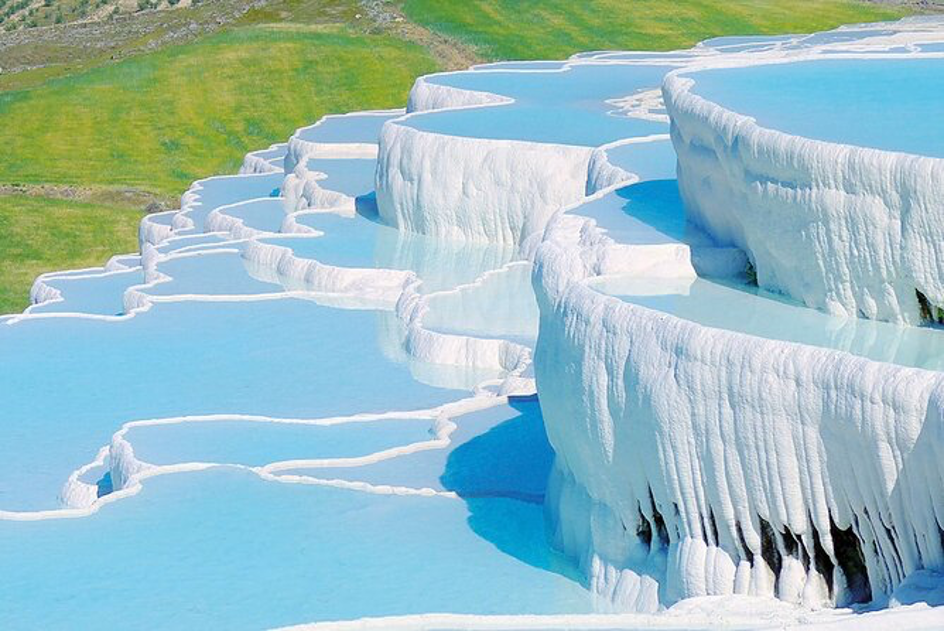
The Cotton Castle of Denizli
Welcome to Pamukkale, a magical place nestled in the heart of Denizli, Turkey. Pamukkale, which means “Cotton Castle” in Turkish, is famous for its stunning white travertine terraces and thermal springs. Let’s explore this fascinating destination and learn about the legends surrounding it.
What is Pamukkale?
Pamukkale is a natural wonder formed over thousands of years by the flow of mineral-rich thermal waters down the mountainside. As the water cascades, it leaves behind deposits of calcium carbonate, creating terraces that resemble fluffy cotton, hence the name “Cotton Castle.”
Legends of Pamukkale
Legend has it that Pamukkale was formed from the tears of a weeping goddess named Hierapolis. According to the myth, the goddess was heartbroken over the death of her lover, and her tears turned into the thermal waters that flow down the mountainside, creating the dazzling white terraces.
Another legend tells the story of how Pamukkale was once home to a monstrous serpent. The local hero, Bellerophon, bravely defeated the serpent, and the water that gushed from the ground washed away the serpent’s blood, leaving behind the pristine white terraces we see today.
Visiting Pamukkale
When visiting Pamukkale, tourists can walk barefoot on the terraces and immerse themselves in the warm thermal pools. The water is said to have healing properties and is believed to cure various ailments. Visitors can also explore the ancient city of Hierapolis, which sits atop the terraces and offers breathtaking views of the surrounding landscape.
Test 34
1. What does “Pamukkale” mean in Turkish?
A) Cotton Castle
B) Mountain Valley
C) Crystal Lake
D) Sunny Beach
2. How were the terraces of Pamukkale formed?
A) By volcanic eruptions
B) By the flow of mineral-rich thermal waters
C) By glacial movements
D) By wind erosion
3. According to legend, who was the goddess associated with Pamukkale?
A) Athena
B) Artemis
C) Hierapolis
D) Aphrodite
4. What is believed to be the origin of the thermal waters at Pamukkale?
A) Underground rivers
B) Rainwater
C) Tears of a weeping goddess
D) Melting snow
5. What local hero is associated with defeating a serpent in the legends of Pamukkale?
A) Hercules
B) Perseus
C) Bellerophon
D) Theseus
6. What can visitors do at Pamukkale besides admiring the terraces?
A) Skiing
B) Swimming with dolphins
C) Walking barefoot on the terraces and immersing in thermal pools
D) Rock climbing
Exploring Pamukkale is like stepping into a world of wonder and enchantment, where nature’s beauty and ancient legends intertwine to create an unforgettable experience for visitors of all ages. Whether you’re fascinated by its geological wonders or captivated by its mythical tales, Pamukkale is sure to leave you awe-inspired.